Waterside Living in Devon Without the Coast
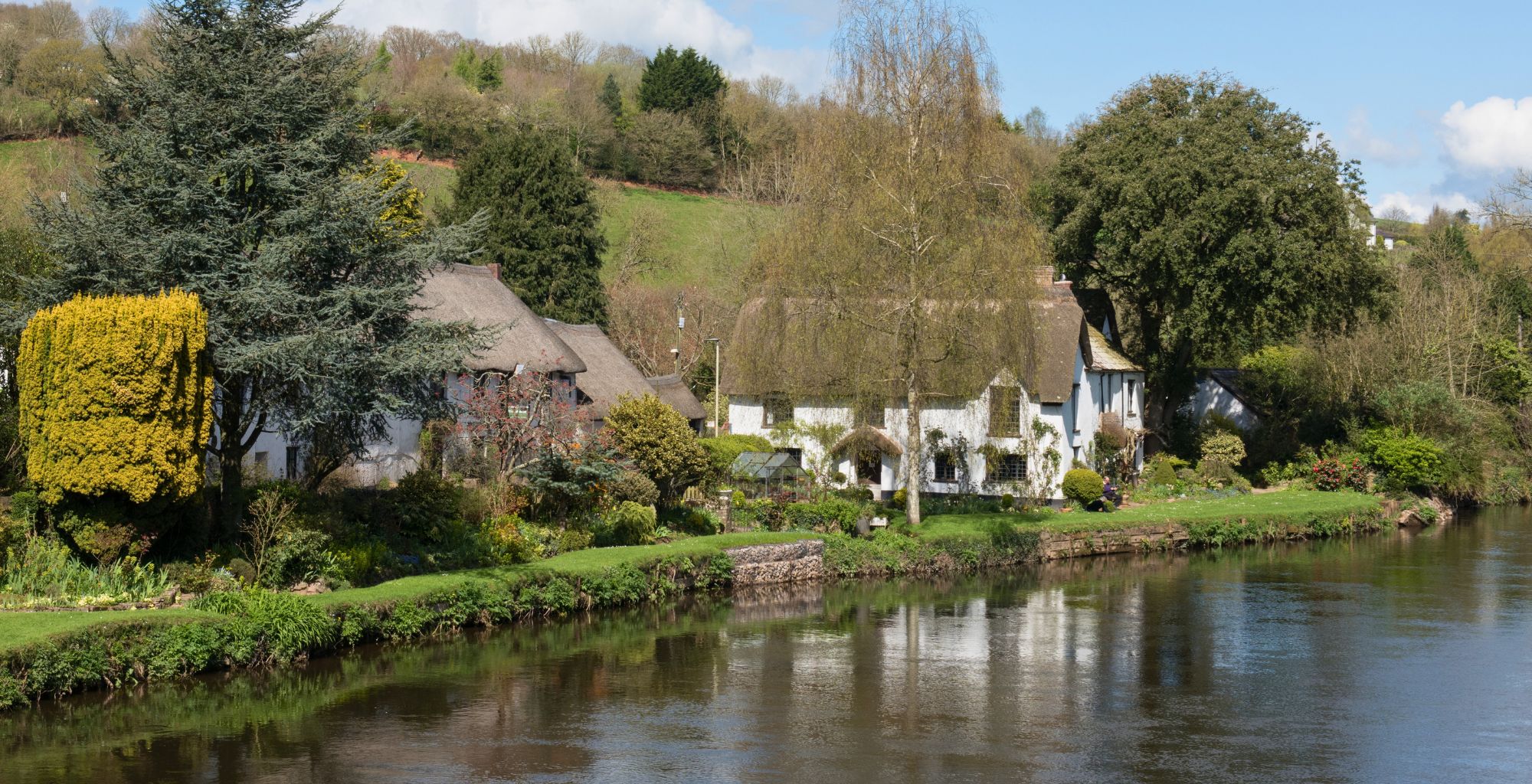
Waterside living in Devon without the coast means something specific: a home set on a freshwater, non-tidal reach of an inland river valley, rather than on the tidal estuaries and harbour fronts the county is better known for.
Say Devon and water in the same breath, and most buyers picture Salcombe, Dartmouth or Topsham. Yet upstream of every tidal limit sits a quieter market that answers to different rules, one built on river valleys, National Landscape designations, and an altogether different relationship with the water.
As a buying agent in Devon, Jennie Petersson explores what sets these inland valleys apart, which four best illustrate the category, and what changes when you buy beside a river rather than the sea.
What waterside without the coast actually means in Devon
The distinction rests on a single line drawn by the tide. Below a river’s tidal limit, the water rises and falls twice a day, the banks are estuarine, and the character is coastal in all but name. This is the Devon most buyers already know: Topsham on the Exe, Dittisham and Dartmouth on the Dart, Salcombe and Kingsbridge on their respective rias.
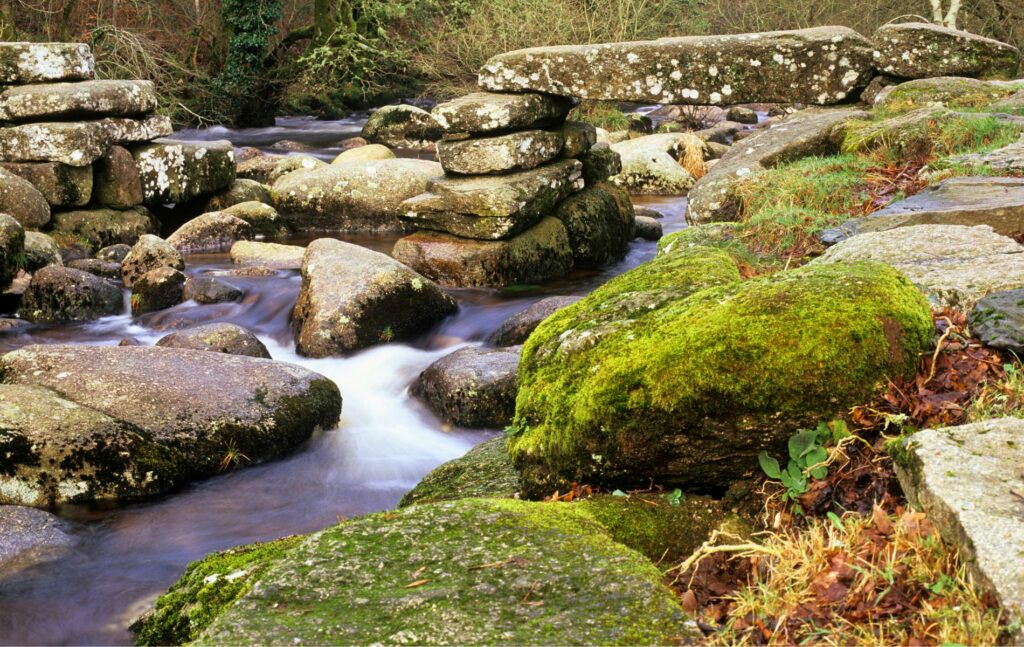
Above that limit, the river runs fresh. It is fed by rain off Dartmoor and Exmoor rather than by the sea; it does not carry salt, and the valleys it flows through are wooded, agricultural, and largely unbothered by the seasonal crowds that define the coast.
Where the tide stops, a quieter Devon begins.
Is this a recognised property market or a curiosity? In our experience, it is a recognisable one, a small and under-documented niche rather than a labelled sector with its own listings filter. Homes on the freshwater Teign, Exe, Dart and Tamar tend to attract a particular kind of buyer and are considered on different terms from the county’s better-known coastal stock. What has been missing is anyone making the case for them as a distinct choice, which is precisely the gap this piece sets out to fill.
The Devon river valleys that fit the description
Four valleys illustrate this most clearly, each with its own geology, its own villages, and its own reasons to appeal.
The Teign Valley
The Teign runs off the high moor and threads through a steep, wooded valley on the eastern fringe of Dartmoor National Park. Christow, Trusham, Doddiscombsleigh and Dunsford sit along it, small settlements of stone and cob where the river is a constant presence rather than a distant view. The valley sides are thickly treed, the lanes narrow, and Exeter is close enough to make the seclusion feel like a choice rather than a compromise.
The Exe above Exeter
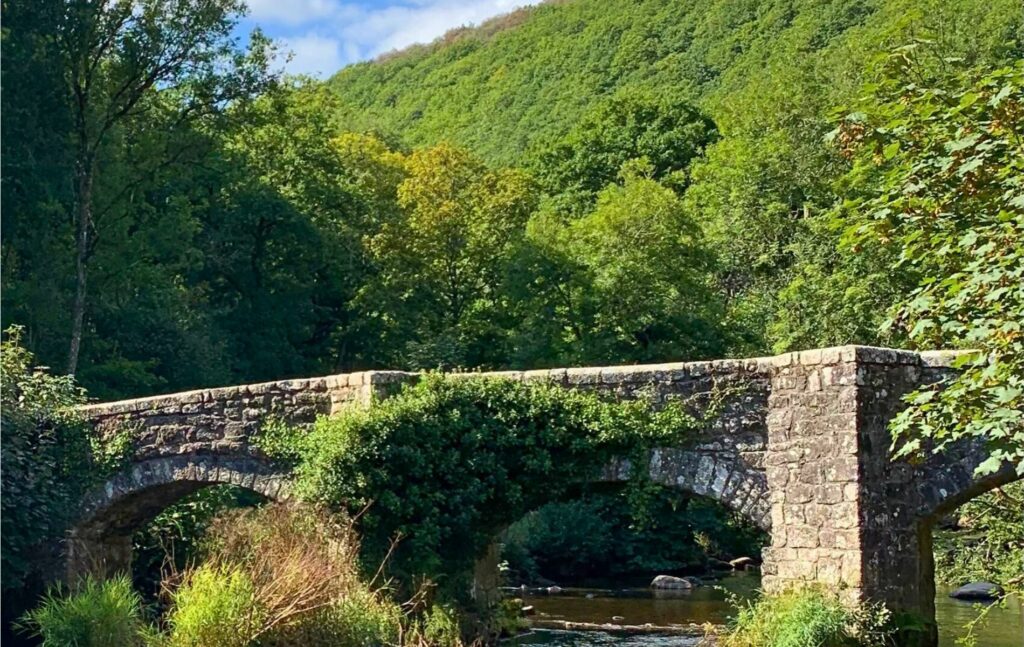
The Exe’s tidal limit sits at Trews Weir, within Exeter itself. Everything upstream of the weir is freshwater and non-tidal, which places villages such as Bickleigh, Thorverton and Stoke Canon firmly in the inland-waterside category, well clear of the Topsham estuary a few miles below. Follow the river to the Somerset border and you reach Exebridge, at the confluence of the Exe and the Barle, where the valley opens into water long valued for its fishing.
The upper Dart
The Dart is tidal only as far as Totnes. Above the town it becomes the freshwater river that gives this stretch its character, running through Staverton, Ashprington and Buckfastleigh before climbing to Holne and the open moorland around Dartmeet. Totnes and the tidal Dart below it are a separate proposition, covered in our guide to living in Totnes; the territory here begins where that one ends, at the weir above the town.
The Tamar Valley and the Bere Peninsula
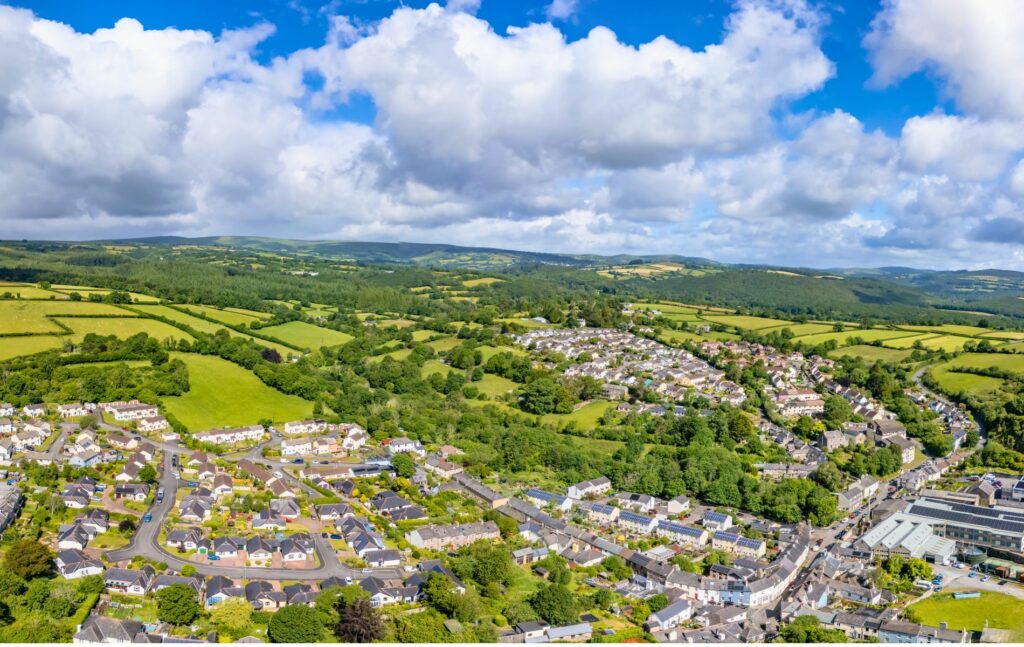
On Devon’s western edge, the Tamar Valley is designated a National Landscape on both the Devon and Cornwall banks, straddling the county border for much of its length. Lifton, Milton Abbot and Horsebridge sit on the Devon side, while Bere Alston and Bere Ferrers occupy the Bere Peninsula, the tongue of land between the rivers Tavy and Tamar.
Across the water in Cornwall, the National Trust’s Cotehele anchors the valley’s wooded, historic feel, a reminder that this was market-garden country long before it was a place to retreat to.
How buying inland waterside differs from the coast
The differences are not cosmetic, and three of them carry real weight at the point of purchase.
The first is ownership of the water itself. Under English law, riparian ownership of a non-tidal watercourse is generally presumed to extend to the mid-point of the channel, a principle known as ad medium filum aquae. In practice this can mean a private interest in the river, and sometimes private fishing rights, of a kind a coastal or harbour-town buyer, dependent on shared moorings and public foreshore, does not typically hold.
None of this should be assumed, though: the presumption can be displaced by the title itself, and any such rights need confirming through the deeds, the usual searches and proper legal advice before they form part of a buyer’s thinking.
The second is flood risk, which behaves differently inland. The Environment Agency maps fluvial, or river, flood risk separately from tidal and coastal risk, and the two carry different planning and insurance implications. Neither is a reason for alarm or complacency; the point is simply that a freshwater valley is assessed on its own fluvial terms, not against the coastal-erosion and tidal-surge measures that govern an estuary home.
Any individual site can be checked against the Environment Agency’s flood risk maps, and confirmed through a solicitor’s searches and a surveyor, before a decision is made.
The third is maintenance. Coastal exposure and salt air ask more of a building’s render, stonework and joinery over time, which is simply part of the trade for a sea view. An inland home beside fresh water sits outside that equation, a practical difference worth factoring in either way.
The case for river-valley living
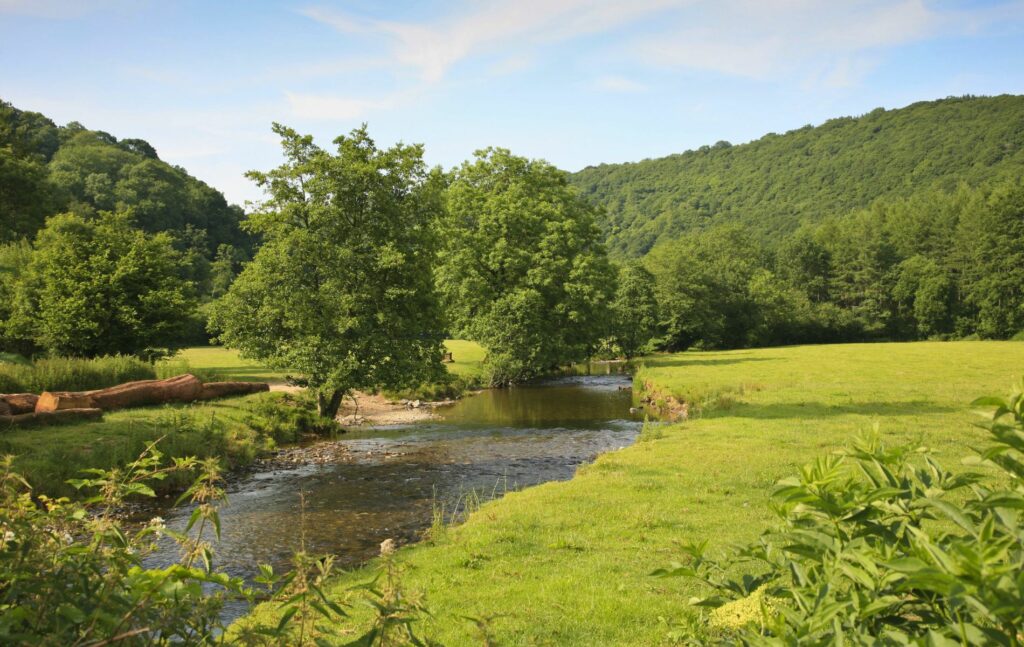
The lifestyle here is defined by the river rather than the sea. Where access and conditions allow, these are waters for wild swimming, for salmon and sea trout, for kayaking and for the long riverside walks that our guide to property in Dartmoor describes along the upper Dart and Teign. Its seasons are the natural ones, keyed to the run of the fish and the height of the water
Here the calendar is written by the river, not by the tourist season.
That contrast matters more than it first appears. Devon’s coastal towns draw a substantial visitor economy, and the popular second-home and holiday-let market that comes with it is part of what gives them their well-known summer energy.
The inland valleys tend to feel different, with less of the pronounced seasonal swing that defines the best-known coastal hotspots, and a rhythm that stays much the same across the year. For a buyer whose priority is a settled, year-round community, that steadiness is often the deciding factor.
Who inland waterside living suits
Three sorts of buyer tend to find their way here. There are those weighing the South Hams and the coast who find the river valleys open up a different sort of home for a given budget, buying beside water in a rural rather than a coastal setting.
There are families after rural privacy who are unwilling to give up water altogether, and who find in a river valley the seclusion of the deep countryside with a swimmable, walkable river at the foot of the garden.
And there are downsizers who want proximity to water without the footfall, for whom a freshwater village offers the setting of a coastal retreat without its seasonal intensity.
Help to achieve waterside living in Devon without the coast
Stock in these valleys is scarce, and that scarcity shapes how a purchase actually happens. Riverfront and river-valley homes are often held for a long time, and in our experience some change hands privately or before they are openly marketed, through local networks where owners and buyers already know the area. This is where a buying agent’s local relationships earn their keep, in hearing of a house before it is listed and in understanding which stretch of which river suits a particular buyer.
Here, knowing the water is half of knowing the market.
Planning is the other practical constraint. Much of this territory falls within National Landscape or National Park boundaries, where the presumption is firmly towards protecting the setting, and where alterations, extensions and new access are considered against that backdrop. Connectivity is the remaining trade-off, and rather than re-argue it here, our assessment of well-connected Devon locations sets out which of these valleys keep you within comfortable reach of Exeter, the A38 and the main line.
For buyers drawn to the water but set on a rural rather than a coastal home, the freshwater valleys are worth a serious look. The right home on the right reach of river is a rare thing, and finding it usually takes local knowledge rather than luck.
If you would value a conversation about how our South West team searches these valleys specifically, and about the kind of homes that come up here, we would be glad to talk it through. You can learn more about our property finder service or contact us for a discreet, no-obligation discussion.